Last week, the Biden administration released the details of its Emergency Temporary Standard (ETS) to require employers with 100 or more employees to be vaccinated for COVID-19 by Jan. 4 or test for COVID-19 at least weekly. Several states have already filed lawsuits against the mandate and a federal appeals panel issued a temporary stay Saturday.
But many employers are beginning to prepare for the ETS to take effect as they face a Dec. 5 deadline to allow employees paid time off to get vaccinated and require unvaccinated workers to wear masks.
So, what does the ETS say? Employers with 100 or more employees must:
Additionally, health care workers who work at facilities that participate in Medicare or Medicaid must also be fully vaccinated or qualify for an exemption by Jan. 4. There is no weekly testing option for health care workers.
We will keep you updated on the outcome of the stay, but we want to emphasize that the ETS has not been repealed. The ETS has only been temporarily suspended. It’s important to note that the deadlines issued by OSHA could remain in effect if courts rule in favor of OSHA.
Here’s a list of some FAQs, resources and tools to help employers comply.
Do you know any resources that may help other employers? Share them with us at communications@denverchamber.org.
Last week, the Denver Metro Chamber of Commerce and the Denver Metro Small Business Development Center (SBDC) gathered to hear the stories of three successful small business owners and recognize VF Corporation’s Kellye Gordon, the 2021 Bill Daniels Ethical Leader of the Year, presented by the University of Denver Colorado Business School. Vectra Bank was a platinum sponsor of the event.
The event, hosted at Asterisk in Downtown Denver, provided a space for entrepreneurs to connect, learn from each other’s journeys and network with peers and professionals from a range of industries. Storytellers Mowa Haile, Ryan Cobbins and Naomi Binkley took turns sharing about their small businesses and the steps they’ve taken to get to where they are today. J. J. Ament, president and CEO of the Denver Metro Chamber of Commerce, and China Califf, director of the Denver Metro SBDC, both spoke at the event.
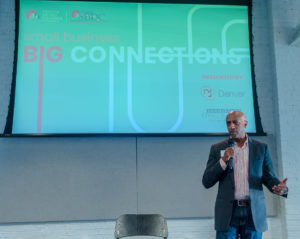 Haile, founder and president of Sky Blue Builders and incoming board chair of the Denver Metro Chamber of Commerce, kicked off the storytelling portion of the event by sharing his experience as a “kid from Africa” who had a dream, persevered despite opening Sky Blue’s doors in 2007 just before the Great Recession and is now able to inspire others and share his expertise as a business owner. Haile relied on the SBDC as he prepared to start his own business. “Everyone has the responsibility to inspire others,” he remarked.
Cobbins, owner of Coffee at The Point, spoke about his path to creating a 3,000-square-foot coffee and wine lounge that’s become a hub for the Five Points community. “It’s not about the coffee, but what happens over the coffee,” said Cobbins. “This was the most impactful way for us to give back to our community.” Cobbins, who does not like coffee himself, created a space within his community that offered non-traditional hours for a coffee shop and worked with his staff to create shifts that maximize their schedules.
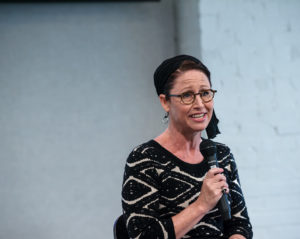 Binkley, founder and managing partner of Fireside Production, closed out the storytelling portion of the event, sharing her journey to founding Fireside Production. A former television news reporter, Binkley started to freelance and “then the economy fell out.” As she decided Fireside Production would become full-time for herself and husband, who had continued working in television news, “the SBDC became my business school.” At the same time, Binkley shared her story about secretly suffering from debilitating chronic pain. “I am a storyteller,” said Binkley. “Stories are what connect us all.”
Following Mowa, Ryan and Naomi’s stories, Kellye Gordon, vice president, ethics and compliance & legal operations at VF Corporation, was honored as the 2021 Bill Daniels Ethical Leader of the Year. “I am so grateful to surrounded by such courage,” she said after talking about the team at VF. View a video about the award and Gordon.
Following the presentation of Gordon’s award, attendees mingled and networked to help forge the “big connections” that will create the next generation of businesses and leaders who will share their stories at future Small Business, Big Connections.
 Increased awareness around climate change, racial and social equity issues and COVID-19 has changed the way that many companies think about environmental, social and governance (ESG) issues. Recent events have exposed vulnerabilities in our economic, political and social systems as well as the need for resilience in our businesses, including our supply chains and larger ecosystems.
This convergence of factors has made ESG a focal point for companies of all sizes. Here in Denver, for example, organizations like Prosper CO, B:CIVIC and Colorado Inclusive Economy are dedicated to helping companies focus on DEI (Diversity, Equity and Inclusion) as a lens through which leaders view all decisions, while also focusing on the nature of the workplace from multiple human-focused perspectives.
Well-integrated ESG strategies provide real value in helping businesses stay successful in the face of disruption while delivering for the common good of all company stakeholders. Consumer pressures also drive companies to focus on ESG. Younger consumers are especially more likely to consider ESG issues when making purchasing decisions. According to PwC, over half of all consumers (59%) say that a company’s purpose and values play an important role in its decision-making.
ESG for midsize companies
Regardless of a company’s size and budget, there are ways to develop and implement an informed ESG strategy that addresses stakeholder expectations and delivers meaningful outcomes. Here are six steps for developing and integrating a successful ESG strategy.
Businesses with well-articulated ESG goals and purposeful strategies are more likely to be resilient and create long-term value for stakeholders. Middle market companies have a critical role to play not only in the future viability of their business but in delivering on the promise of stakeholder capitalism.
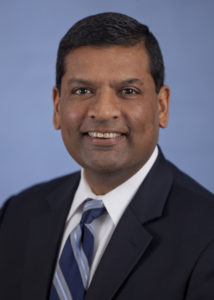
By Raju Patel, Senior Vice President and Market Executive of Global Commercial Banking and President of Bank of America Denver
The Denver Metro Chamber of Commerce “Your Conversation With” series has continued to facilitate fascinating conversations among business leaders and members of the Denver community on topics ranging from the Denver Public Library to leadership lessons from board chairs of the Denver Metro Chamber of Commerce, Denver Metro Leadership Foundation, Denver Metro Small Business Development Center and Metro Denver Economic Development Corporation.
These virtual meetings have provided opportunities for both featured guests and participants to share their expertise with others. The two most recent conversations, with Chamber Board Member Mowa Haile of Sky Blue Builders and Michelle Jeske of the Denver Public Library, led to robust conversations around economic recovery for the city, small business development, the impact of technology on information services and the importance of mentorship. Below are a few of the key quotes and takeaways from those sessions:
You can also watch recordings of both sessions. Click here for the conversation with Michelle Jeske, and click here for the conversation with Mowa Haile.
Join us for the next “Your Conversation With” on May 18 for a discussion with the CEO and Executive Director of Firefly Autism and the 2021 9NEWS Leader of the Year Jesse Ogas. Register for the event and watch the video below to learn more about Ogas ahead of the event.
Thank you to our Your Conversation With sponsors: Presenting Sponsor – Contract Furnishings Inc. and Gold Sponsor – Richards Financial Group.
Harvard Economist Dr. Raj Chetty Delivers “Convening for Opportunity” Keynote on Confronting Economic Disparities in Colorado
Dr. Chetty Spoke with Business Leaders on Inequalities that Exist in Workforce, Small Business Ownership and Housing Data During a Denver Metro Chamber of Commerce, Bank of America and Prosper CO Virtual Event
DENVER (March 3, 2021) – The Denver Metro Chamber of Commerce, Bank of America and Prosper CO convened local business leaders for a discussion on economic disparities in Colorado. Raj Chetty, Ph.D., William A. Ackman professor of public economics at Harvard University, delivered a presentation on insights the business community can gather from his research to increase equity and opportunity for their employees. Ebony Thomas, senior vice president of racial equality for Bank of America, Raju Patel, Denver market president for Bank of America, and Kelly Brough, president and CEO of the Denver Metro Chamber of Commerce, also spoke at the event.
Today’s event, “Convening for Opportunity: Confronting Economic Disparities” coincided with the release of Prosper CO’s Top 10, a list of action items and steps employers and employees can take to increase opportunity within their organizations. Prosper CO is an affiliate of the Denver Metro Chamber, launched in 2019 that brings together the public, private and nonprofit sectors to identify, understand and eliminate the barriers to economic opportunity in Colorado, particularly for Black, Latinx and female Coloradans.
The Prosper CO Leadership Council unites business leaders across industries to tackle three main areas of work: 1) Move Black and Latinx residents and women into higher paying jobs and create more of those jobs. 2) Ensure more people can start and grow businesses and remove the barriers to small business ownership for women and people of color. 3) Address the housing affordability challenge for the region by placing homeownership within reach again, allowing more families to begin to build wealth.
“Our business community continues to show its commitment to build a more inclusive economy,” said Brough. “Dr. Chetty’s data only further reinforced the strategies developed by Prosper CO to address those disparities. We were thrilled that so many business leaders joined us today to hear the keynote address and discuss what every employer can do today to create an economy that works for everyone.”
Dr. Chetty educated business leaders on the realities of inequality in Denver through his work at Opportunity Insights. Key takeaways included:
“The roots of economic opportunity are hyper-local,” said Dr. Chetty. “That perspective shows us what public policy steps we can take to improve economic outcomes by reducing segregation, focusing on place-based investing and improving higher education.”
Business leaders were able to view the hard data showing the inequalities that persist today – from racially segregated neighborhoods to vastly different rates of small business ownership based on race – and then broke into breakout groups designed to foster discussion on strategies to improve equity in jobs, small business ownership and housing based on Prosper CO’s Top 10. Participants shared stories of their own experience, steps their organizations are taking and ways to begin implementing strategies outlined by Prosper CO with the insight of Dr. Chetty’s research.
“Today’s event demonstrates the power of the business community – across sectors, cities and industries – working together to foster change,” remarked Thomas. “By recognizing the needs in the communities we serve, we can collectively work to eliminate barriers, address inequities and take action to make a difference starting today.”
Prosper CO is committed to devising strategies that will help more Coloradans access economic opportunity in this state and encourage employers to step up and lead the charge toward a more prosperous Colorado.
Regulations have changed more in the past 10 years than in the previous 50. Fully understanding these new employment laws and regulations is key for employers to implement them correctly. Enacting policies around new rules on equal pay, paid family leave, minimum wage and salary increases can be daunting for companies to ensure they are in compliance. These laws are complex, detailed and can be hard to fully grasp without legal expertise. At the same time, non-compliance can result in severe financial penalties and other consequences, so it is vital that Colorado businesses have a comprehensive knowledge of these rules.
This guide, in partnership with Obsidian HR, provides you as an employer with insights and details about new rules and how they will affect your business including:
B:CIVIC connected with GroundFloor Media’s Founder and Chief Cultural Officer Laura Love earlier this year to discuss embedding corporate social responsibility and employee engagement into the DNA of your company from the beginning.
This was originally posted on B:CIVIC’s website. Click here to view the article.
Company Overview:
GroundFloor Media (GFM) and its sister agency CenterTable navigate the blurred lines between marketing, public relations and digital advertising – online and off. The GFM team creates and manages messages from inception through an intermediary to the end consumer, while the CenterTable team creates messages that engage directly with the end consumer. Both agencies work with a wide range of clients – from food and beverage to health and wellness to technology and telecom – who consistently offer innovative and creative opportunities to reach new audiences. GFM has been recognized seven times by Outside magazine as one of the top 10 Best Places to Work in America and is the longest-running company nationwide to be listed in the top 10. In addition, GFM was named a Certified B Corporation in 2016 by the global nonprofit B Lab. The certification recognizes companies meeting the highest global standards for corporate transparency, accountability and social and environmental performance. In 2019, GFM and CenterTable were honored with The Civic 50 Colorado award, recognizing 50 Colorado-based companies that set the standard for superior corporate citizenship in our state.
B:CIVIC: GroundFloor Media has said, “We believe that companies, as well as individuals, must be good tenants of the world.” Tell us a little bit about that decision in making social responsibility and philanthropy a part of GroundFloor Media’s strategic plan.
Laura Love: I started this company in the middle of the dotcom bust in 2001, right before 9/11, and when I first moved to Colorado, I actually didn't know very many people here at all. What I found is that Colorado, as a community, is very giving, supportive and welcoming, especially for those of us transplants. I started the agency in the basement of my home in Boulder.
And, without a lot of contacts in the area, one of the ways that I decided to meet my community is to go to nonprofits and offer my services for any of their nonprofit needs. The people in the community really embraced, welcomed and helped me start the business. It just felt like the natural way for us to give back – we made community part of our strategic DNA.
B:CIVIC: A lot of people start a business and then they figure out how to give back. When it's ingrained in your culture like that, from the beginning, you can tell why you've had so much success.
LL: When you're starting a business, one of the best ways to feel more confident is to realize that you have value that you can provide to others who may not be in that same position. By offering services to organizations that weren't necessarily in a position to afford PR or marketing, it was actually selfish — it made me feel better.
B:CIVIC: Can you share with us GroundFloor Media's community involvement efforts?
LL: Over the past 20 years, we've certainly refined our efforts, but we've historically always given back at least 15% of our profits, either through nonprofit rates, through pro bono work or through our giving-back program. As we continue to grow and have more resources, we're able to do more. When we look at our overall community impact, it's in three specific areas.
The first area is one that we've had since the early days, which is our “Get Giving” Program. Our Get Giving Program includes opportunities for our team members to have “Get Giving” days of service. Those are scattered throughout the year and they are really about what our team members are most interested in from a personal standpoint. For example, we have decorated the cottages of the Denver Children's Advocacy Center. We have built houses with Habitat for Humanity. We have helped decorate bags and deliver meals for Project Angel Heart. We have provided stockings that the Children at Tennyson Center can open on Christmas morning.
It's an opportunity to do two things: one, it's for us to do some team building as an organization and the second is to do that in a way that's meaningful for our community.
We have 42 team members, primarily located in Colorado, although we do have team members who are in other states. That actually leads me to our second big bucket: the Get Grounded Volunteer Program. Our Get Grounded Volunteer Program is for team members who volunteer their time. It can be at any organization of their choosing and we give them four hours off each month to go volunteer at nonprofits, schools or any other 501(c)3 organization. At the end of the year, our organization matches all volunteer hours by donating $10 per hour, up to $400 per team member, per calendar year. Since the inception of that program, we've given over $36,000 and about 2,800 volunteer hours — and that's through any nonprofit that our team members will support.
Our third program, which is a third pillar of our community impact, is the one that I am probably the most passionate about and that is our Get Grounded Foundation. In 2015, we decided to formalize what we've been doing for years, but to do it in a way that is an established, private 501(c)3. We provide community grants to new, innovative, entrepreneurial programs. We provide the seed money and that seed money goes to an existing nonprofit in the Denver area in either child abuse or neglect, childhood hunger relief or youth behavioral health.
We've given out over $158,000 to nonprofits since 2015 to support some of those programs to help them get something off the ground floor.
B:CIVIC: Why did you choose to support nonprofits that are supporting at-risk youth?
LL: I started this business when I was pregnant with my first child. Just realizing how fortunate and how privileged she was going to be to come up in a life where we could support her and put food on the table and give her an education and resources — and there are so many incredible children out there that, of no fault of their own, don't have that same opportunity. A lot of my teammates are working parents, and it just felt very aligned with all of our personal values to be able to give back that way.
B:CIVIC: Most of your team is local to Colorado, but you do have some remote employees as well. What's the approach that you use to get your employees involved in your community efforts?
LL: When we hire, we have a very interesting hiring process and some might call it very non-traditional, but we look at how a potential team member might align with our core values. As we look at these potential team members to join our team, we want them to be there for a very long time. We have an attrition rate that hovers at about 3% annually. It does become a question that we ask during the hiring process. It's not that difficult. Once somebody is on board, they embrace this philosophy from the beginning.
We are fortunate to be able to choose our team members really carefully and likewise, we want them to choose into our environment as well. We call it “talent-tude,” which are those mad skills complemented by a great outlook on both your work and your life. We love to have fun and we're here to do exceptional work for our clients, so if we can find people that have that same feeling and they're not afraid to leave their ego at the door, they tend to stick around for a long time.
B:CIVIC: Can you share with our community a little bit about Get Golden?
LL: Get Golden is a handbook that we provide to all of our team members and it really talks about our values, our beliefs, our attitudes, our behaviors and how we treat one another. That is truly the secret sauce that makes us who we are. And equally as important as how we treat one another is how we're showing up for our clients.
We talk about the Golden Rule. It's really, really simple and yet it's so profound.
We work with a leadership coach to do Emergenetics for all of our team members. It’s rooted in the fact that who we are today is the emergence of our behavior, our genetic makeup and our life experiences. It's how you think and how you behave, and so there isn't a right or wrong way for any of it, but it does allow us to look at each one of our team members and say, are they analytical or structural? Do they live more in a conceptual world or are they social?
We acknowledge everyone thinks and behaves differently. We respect how we behave and think and how each of us can approach one another and eliminate conflict by using our profiles. We incorporate this into our culture.
B:CIVIC: When it comes to corporate social responsibility (CSR) and employee engagement, what do you think has been GroundFloor Media's most successful initiative to date?
LL: I have to say, I don't think it's just one thing. It is the holistic view of CSR that really has set us apart as an agency, but more important, has allowed us as a very small business to incorporate giving and CSR into our values, into our DNA and into the values that we have internally, as well as externally.
So that's the first thing: How do we have an offering that teaches people how to do this? Then, it’s how do we live this feeling of giving back within the agency walls. Without all of those components, I'm not sure that we would have the strength around the type of systems that we do.
B:CIVIC: You have recently launched a new podcast to support companies and individuals in making a positive impact, Good & Grounded. Tell us a little about the goals of the podcast and the kinds of stories you have and plan to feature.
LL: As an extension of our recent Doing My Part Colorado effort that we rolled out to support Colorado nonprofits during this pandemic, we are interviewing dynamic, passionate and grounded local leaders who are impacting our community during this time of uncertainty. Each episode of Good & Grounded is focused on one critical issue that deserves our attention in our ever-changing world. These interviews are short, conversational and very human. We have interviewed a dozen CEOs on topics ranging from the rise of domestic violence and child abuse to the impact this pandemic is having on the restaurant industry to the state of corporate social responsibility during COVID-19. We have talked to Erin Pulling, CEO of Food Bank of the Rockies, about food insecurity, Deirdre Johnson, the CEO of the Center for African American Health, on how Black Americans are dying from this pandemic at three times the rate of their white peers, Kelly Brough, president and CEO of the Denver Metro Chamber, on the road to economic recovery, and Pat Meyers who led Colorado’s efforts to procure PPE and all of the complex challenges of the global supply chain. We always end by asking our guests, “What one good thing can we do right now?” We continue to look for powerful leaders to help us bring critical issues to life, so if your readers know of strong CEOs, please send me a note.
B:CIVIC: Before we close, we want to thank you for your leadership in developing and advocating for the Colorado Companies Uniting Against Racism initiative. The primary pillars of the commitment are to listen, learn and lead to combat systemic racism. Why is this pledge important to you and your company? Is there a unique role small businesses can play in leading this change?
LL: As communication professionals and small business owners, we have a responsibility to listen, learn and lead while working toward a greater understanding of the existing societal structures and unconscious biases that inform what we do. By working toward that understanding, we are less likely to produce work that creates damage through our communications. Ultimately, gaining a greater understanding of these things will help us be more compassionate individuals, as well as effective and aware communicators and business leaders. The bottom line is that we are human and know that we have a lot to learn. We will make mistakes along the way. When we make mistakes, we pledge to own them and continue to learn and improve. As a small business, we can make smaller steps and encourage other small business to join the Colorado Companies Uniting Against Racism initiative as well as the Inclusive Economy Movement. As Barbara Mikulski said, “Each one of us can make a difference but together we can make change.”