Our sincere thanks to those of you who recently took our membership survey. The information and insights from this survey are really helpful as we set our priorities and focus for the upcoming year.
We learned a lot and a message that came through loud and clear was the more engaged you are through any of our Chamber affiliates, the more satisfied you are with your investment. So, we want to make sure you know what opportunities are available to you.
Our monthly Net90 events are where many of these leads take place. And, many of you told us that you have been able to make even more connections since we’ve taken our networking virtual, creating a structure that helps you meet even more people than often possible in person. (We can’t wait to see you in person again though!  ) Don’t miss our next Net90 on Oct. 14.
And, of course our Gold networking events and programs are delivering similar results, bringing together high-level decisionmakers to learn and discuss business trends and policy issues.
And, many of you told us that our Leads Groups are where you perfected your company’s pitch, taking your sales to the next level. These groups are carefully curated to bring members from non-competing companies together to grow their businesses – and the groups are meeting virtually right now.
Here are some additional upcoming programs:
Denver Metro Small Business Development Center – LEADING EDGE™ for Entrepreneurs: This 10-week course is designed to teach you how to start and grow a successful business. The next course begins Thursday.
Denver Chamber Metro Leadership Foundation – 9NEWS Leader of the Year: Although the event isn’t until March, we’re accepting nominations now for the 2021 9NEWS Leader of the Year. Last year, this honor went to Jerome Davis with Xcel Energy. Leadership in our community has never been more important than this year. Nominate the leader you have seen step up during these uncertain times. Nominations close Oct. 5.
B:CIVIC – 2020 Summit Re(Define): This annual event is designed to support corporate social responsibility (CSR) professionals as they (re)define CSR for the next decade. Attendees will explore best practices, find inspiration from peers and hear from experts in the field. The virtual event is Oct. 22. Register now.
We will keep the opportunities coming your way in 2020-2021. If you have suggestions for us, you don’t have to wait until our next membership survey. We want to hear from you all year long. You can always reach out to me or your membership representative with your ideas.
We love serving our members and doing everything we can to ensure you and your employees thrive. Thank you for choosing Colorado!
Kelly Brough is the president and CEO of the Denver Metro Chamber.
SBA Taking PPP Loan Apps Only from Small Lenders This Evening
To ensure access to the Paycheck Protection Program (PPP) for the smallest lenders and their small business customers, the U.S. Small Business Administration (SBA) announced it will accept loans only from lending institutions with asset sizes less than $1 billion from 2 p.m. through 10 p.m. Those lenders will also be able to submit outside that timeframe. This applies only to today’s application submissions. Businesses should continue to contact their lenders to apply. To find a lender, visit the SBA’s website.
Second Round of PPP Funding Includes Support for Seasonal Workers
Earlier this week, the U.S. Small Business Administration released a new interim rule for the Paycheck Protection Program (PPP) that enables organizations to include seasonal workers’ salaries in their loan amount calculations. The rule says:
“A seasonal employer may determine its maximum loan amount for purposes of the PPP by reference to the employer’s average total monthly payments for payroll ‘the 12-week period beginning Feb. 15, 2019, or at the election of the eligible [borrower], March 1, 2019, and ending June 30, 2019.’ … A seasonal employer may alternatively elect to determine its maximum loan amount as the average total monthly payments for payroll during any consecutive 12-week period between May 1, 2019 and Sept. 15, 2019.”
Seasonal employers that typically hire more staff during the summer can account for that in their loan amount calculation. This will help businesses that may not return to full capacity this summer pay employees who the employer would otherwise need to lay off or reduce hours.
Read the full interim rule. The Treasury Department also released an updated PPP FAQ to address the latest information related to the new round of PPP funding.
DRCOG Releases Data on COVID-19’s Impact on Workers
The Denver Regional Council of Governments (DRCOG) has released a data brief showing that the workers most vulnerable to the economic impacts of COVID-19 already have more modest incomes, with median wages estimated at half of the median for workers who are not in immediate-risk industries. Twenty-three percent of the region’s workers are vulnerable to the immediate effects of the pandemic response. The data was compiled in partnership with The Brookings Institution. View the data brief.
Governor Establishes Health Equity Response Team
Gov. Jared Polis established a Health Equity Response Team to tackle the inequities many Coloradans are experiencing because of this pandemic. In his announcement, Polis shared that people of color are disproportionately likely to be exposed to COVID-19 while working in low-paying essential jobs, and are more likely to have limited access to affordable health care, child care and transportation. The Office of Health Equity will lead the team. Learn more about the team’s responsibilities and see a list of its members.
Governor Polis Issues Safer-at-Home Executive Orders
Gov. Jared Polis issued executive orders earlier this week to address regulations and requirements as the state enters the “Safer-at-Home” phase of the pandemic, which officially began Monday. The orders include:
Denver and most other metro area counties extended their stay-at-home orders through May 8. Read the state’s Safer-at-Home announcement and executive orders.
Denver City Council Defers Tenants’ Rent Payments
The Denver City Council unanimously voted this week to allow tenants of city-owned properties to defer their rent payments for three months. The buildings include the National Western Center, the Denver Center for the Performing Arts and the Wellington Webb Municipal Building. Read the legislation.
Kelly Brough is the president and CEO of the Chamber.
So much of what we’ve been through during this pandemic has been unpredictable and the directives of how to best manage this time have been changing quickly. This next phase is a critical one as we all consider reopening our workplaces. This is a moment where we really need and want to make the right decisions.
I know every one of us is considering how to ensure we don’t increase the spread of the virus and keep our employees and customers safe. We want you to have the best thinking about how to do just that.
Get feedback from your team. Information is key to moving forward, and listening to the issues, challenges and concerns employees have will help shape your best strategy. Find out who among the staff believes they can return to work, what concerns they have, and their suggestions for creating a safe workplace. Remember that the lack of child care is presenting challenges for employees with young children. Other employees may not feel safe because they are among our vulnerable populations or caring for immediate family members who fall into those high-risk categories. These positions need to likely stay working remotely if possible, and you may need to try to find other strategies that would allow you to support them. You’re going to want to know the revised rules for paid family and medical leave before you start these conversations.
Assess who needs to come back. Even if employees want to come back into the office, should they? The state’s Safer-at-Home phase still encourages people to stay home as much as possible. At the Chamber, many of our teammates have been able to be productive working remotely or working remotely most of the week. We will continue to conduct a great deal of work remotely, which also helps protect those who start going into the office.
Rethink your workplace from beginning to end. Think about how your team gets to work – we provide EcoPasses for our team and many use them. RTD has implemented several steps to keep passengers safe, but if you have employees who are concerned about taking the bus or light rail, explore other options that might feel even safer.
Clean like you’ve never cleaned before. Ensure your space is cleaned daily and you’re disinfecting your workplace in compliance with recommendations. The Centers for Disease Control and Prevention has a webpage dedicated to helping employers clean and disinfect. Work with your teams who clean your space to consider every point of touch in your space.
Reduce touch points and create space between people. Before you open the doors, think about reducing the need for touchpoints, like elevator buttons and closed doors, and redesigning common spaces and high traffic areas. Some ideas are to prop open doors to bathrooms (ensuring privacy isn’t an issue of course), stagger work times, provide barriers in smaller workspaces or re-assign workspaces to distance employees.
Protect the health of the team. Coming to work with a fever was a bad idea before. Now, it’s critical that none of us comes to work with one. Have every employee take their temperatures when coming in and answer key questions about their health before they enter the office – these steps are what many essential work places, like our hospitals, have been doing for the past six weeks. Require employees to wear masks at work – we have bought masks for our team to wear when they are in the office. The state released a helpful video to show how to set up your workplace to take temperatures.
Advise employees on how to keep their families safe after coming into work. The American Medical Association has recommendations for doctors that might be useful for all workers returning home from work.
We are so grateful that several of our members have released guides to help employers prepare their workplaces or to share what they have done as essential employers during this time:
Last week, we hosted a webinar on workplace re-entry that included a presentation from Betsy Markey, executive director of the Colorado Office of Economic Development and International Trade, on the state’s Safer-at-Home guidelines and requirements. View a recording and the presentation.
Tonight at 6:30, tune in to a Denver7’s COVID-19 Town Hall where I, along with Denver Mayor Michael Hancock and others panelists, will explain state and local health orders and their impact on businesses. Learn more.
In the end, we’re all dedicated to one goal – stopping the spread of this pandemic so we can really get back to work. What’s clear is this is the moment, as we slowly begin that process, when we MUST get it right. We all know we need to make some changes to how we do business to keep our employees and our customers safe and stop the spread of the virus. Let’s be smart together about how we do this. If you have resources on this topic, please send them to us at communications@denverchamber.org, and visit denverchamber.org/covid for more information and our upcoming webinars.
Kelly Brough is the president and CEO of the Denver Metro Chamber.
Black History Month is an opportunity to celebrate and recognize the contributions and impact of African Americans. It’s also a time to look to the future and find ways to break down the barriers that prevent people of color and other populations from prospering today.
As human resources director at the Denver Metro Chamber of Commerce, I know that breaking down those barriers in the business community starts with understanding the problem. Through a Chamber family-led initiative called Prosper CO, we’re examining ways to create an economy that works for all. That work has led to some key discoveries from our data partners, the University of Colorado Denver and The Brookings Institution:
So, what do we do with that information? Understanding this information presents the opportunity to create change – and it can start at your workplace with your hiring process. Here are some efforts we’ve implemented to promote a diverse and inclusive culture at the Chamber.
Draft job descriptions that open opportunity. Many of us know the feeling of scanning the job description of our dream job only to check off all the reasons we’re unqualified for the position. That’s a defeating feeling. The best person for your job may not have the four-year degree that has historically been required.
Look at that job description through a skills-based lens. Chamber member Skillful, a nonprofit initiative of the Markle Foundation, is an expert in skills-based hiring, and we are regulars at their trainings. They tell us to think about the skills your candidate must know on day one and what they can learn on the job after being hired. For instance, do they need experience with a certain software, or is it enough that they have the ability to work on a computer and can learn that software after starting the job?
If your job description is inclusive, your candidate pool is likely to be, too.
Take your job opening to the people you want to attract. “Location, location, location” doesn’t just apply to real estate. If you’re not posting your opening where diverse candidates look, your talent pool will continue to be what it’s always been. Consider job boards of diverse universities, chambers and businesses that predominantly serve communities of color. You’ll see the results in the candidates who apply.
Create a screening and interview process that reduces bias. How do you do that? Apply that skills-based lens again. Questions that confirm a candidate’s credentials won’t uncover whether they have what they need to do the job. Ask how they have responded to certain situations that may reveal their conflict management or communications skills, for instance. Also, look for answers that may demonstrate diversity of thought that would bring value to your business. New ideas may lead your team to innovate in ways you’ve never considered.
You can’t uncover all of this in one interview, either. I recommend three interviews with colleagues who represent various levels and departments in your business. After the interviews are complete, gather your colleagues to learn what they saw in each candidate. If you’ve built and posted your job description strategically and asked skills-based questions, the best candidate will rise to the top.
Continue your efforts after hiring. Your inclusive efforts shouldn’t stop when the candidate accepts the position. What are you doing to welcome them on their first day? Think of jobs you’ve enjoyed and others that left you longing to be somewhere else. Do you remember your first day at those jobs? Your new hires will, too. Communicate with them before they start about what to expect and that you’re excited they’re joining the team. Prepare their workspace so they can sit down and feel at home on day one and take them to lunch.
Check in with them regularly over the next few months to find out whether they have everything they need. Those regular in-person check-ins may take no more than 15 minutes but that’s invaluable time if your new hire feels valued.
Then, what are you doing to promote an inclusive culture for your entire team? Ask your staff what they want and what would make them feel most welcome. The best ideas may come from those excellent employees you brought in through your inclusive hiring practices. Organize panels that offer diverse perspectives from communities of color, LGBTQ populations, genders and political affiliations. Recognize a variety of holidays or celebrations, even it’s just through an email or a break in the day. Participate as a team in external events that promote cultural awareness.
Share your ideas for creating an inclusive, diverse workforce. We’re all ears at the Chamber. If you have ideas, please share them with me at romicha.cooper@denverchamber.org.
Romicha Cooper is the human resources director for the Denver Metro Chamber.
With the start of a new decade comes another important benchmark: the U.S. Census. The short questionnaire can impact you and your business. Find out why we’re committed to ensuring every Coloradan counts.
Having access to the data the informs your business strategy. When making a business decision, data is critical. The Census provides crucial demographic information about customers, workforce and the economic landscape that businesses have come to depend on. The Census is also the benchmark that informs the quality and accuracy of commercial databases that so many businesses use.
Getting our fair share of federal funding. From early education to transportation funding, federal investment impacts every Coloradan – and the allocation per Coloradan is $1,481, accounting for about $13 billion, or one-third of Colorado’s budget. An undercount, even by a small margin, could mean losing billions in federal funding over the next 10 years.
Representing Colorado. Colorado is projected to add one seat in Congress and raise our voice as a state. But, if as few as only 1.3% of people don’t respond, Colorado may not get that seat.
Starting in March, you’ll receive your questionnaire from the Census. The U.S. Census recently connected with our members on what to expect – flip through their presentation to learn more:
Attracting the right employees is critical for the growth and success of a business.
Whether you are a small 10-person operation with one office, or a large business with 9,000 employees and 20 different entities in Colorado alone, like Comcast NBCUniversal, finding the right employees who will, as we like to say, “create the future with us” is more simply said than done.
So, let’s take a step back and focus on a few themes to help the right candidate for your business assimilate, develop and stay with your company throughout their career.
Be Transparent
According to Glassdoor, “93% of employees/job seekers say it’s important to be thoughtful and informed about all aspects of a company (e.g., culture, values, mission, business model, future plans, pros and cons about the workplace) prior to accepting a job offer.”
When listing positions, in addition to highlighting the primary responsibilities and requirements of the role, it’s also important to highlight your company culture and values.
For example, at Comcast we have a long-standing tradition of hiring and supporting the military community, and we highlight this commitment in every listing. We also feature our culture on our careers website, so when job seekers are doing their research, they can easily find our core values and learn about how new team members will get the personal support of a small company with the possibilities of a global industry leader.
Think about what makes your company culture unique and highlight it prominently on your channels and throughout the interview process.
Train to Maintain
Once a new employee is on board, provide them with development and growth opportunities. This includes providing leadership experience, exposure and education.
Experience is about on-the-job development – build on their current skills and responsibilities by giving them special projects or stretch assignments.
Expose them to different parts of your business. Encourage your employees to participate in job rotations or to connect with colleagues on other teams for shadowing opportunities.
Education enables them to continue to reinvent and grow their careers. According to a study from EdAssist, 93% of respondents said that using their employer’s tuition assistance program helped them to develop the skills they needed to grow within their company. At Comcast, we offer financial support for coursework, academic and financial advising and discounted tuition and fees.
The right combination of training and educational benefits helps foster innovation and growth for business and employees.
Challenge through Opportunity
We have a team of people who work in the heart of Downtown Denver on our Comcast Technology Solutions team, and their team culture fosters the entrepreneurial spirit to explore the art of what’s possible without constraint.
Ken Klaer, executive vice president of Comcast Technology Solutions and Strategic Infrastructure, notes, “You can’t just focus on one thing. You need to offer great packages; you need to provide an amazing, welcoming workplace culture and environment; and you need to provide employees with a steady stream of interesting, inspiring work.”
Motivating employees who thrive on exploring what’s next and who are passionate about achieving success through new and creative means are invaluable to an organization.
Leverage Your Workforce to Create Impact
It’s important to educate employees about the work a business does in the community to be a good corporate citizen and how it impacts our communities.
One way we do this is by leveraging the unique aspects of our company and workforce. At our Telemundo Denver station, our employees provide local underserved youth behind-the-scenes tours of the studio to see how it operates and allow youth to explore future career opportunities.
There are many ways to involve your workforce in your corporate social responsibility efforts, but if you put the unique skills of your workforce into action, your employees will feel valued and connected to your business and community.
While there is no silver bullet approach to attracting, hiring and retaining the right employee for your business, if you keep these themes in mind your business will be well-positioned for being a great place to work.
Leon Barnes is the Vice President of Human Resources for the Comcast Mountain West Region
Yes, I know, I know, email — We're all drowning in it. Who in the world needs more emails in their inbox?
Yet, do a quick Google search for the phrase “companies using email marketing,” and you will quickly find examples of companies crushing it with email marketing.
So why are these companies using email marketing?
Well ... BECAUSE EMAIL MARKETING WORKS!
The average ROI for email marketing is reported to be anywhere from 3,800% to 4,300%.
So, for every $1 spent on email marketing, an ROI between $38 to $43 can be realized.
When compared to other marketing channels, such as TV, radio, social media, video and paid search, for example, email marketing beats them all.
I personally experienced the power of email marketing back in November 2007 with a company I was a partner in, and the CEO for, called Learning Like Crazy, Inc. It is a language learning company that sells language learning courses online.
From a product perspective, we spent most of 2006 and 2007 creating level two of our flagship product called Learning Spanish Like Crazy.
On the marketing front, we focused a lot on building a sales funnel that leveraged email marketing. The goal was to convert prospects into leads, leads into customers and customers into Learning Like Crazy brand advocates. Although we did not refer to it by name, we basically created our sales funnel as a customer value journey.
What Is the Customer Value Journey?
Fast forward to 2019 and, as a Certified Digital Marketer partner, one of the foundational tools we use is the customer value journey (CVJ). To shed some light, it’s an eight-stage framework that can help any company turn complete strangers into leads, leads into customers and customers into advocates and active promoters.
The eight CVJ stages are:
1. Awareness – Prospect sees an ad or hears about you via a referral. For example:
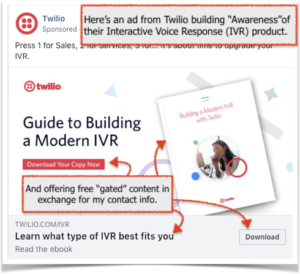
2. Engagement – Prospect reads content on your site, engages on social media, watches a video, etc. For example:

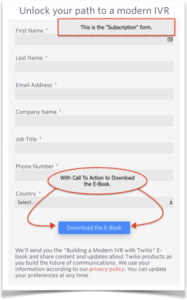
3. Subscription – Prospect gives contact information in exchange for “gated” content in which they expect to find value (think white papers, e-books, etc.). For example:
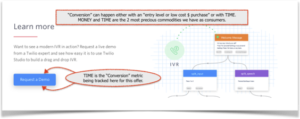
4. Conversion – Prospect becomes a customer by making a low-cost purchase or schedules a demo or visit. For example:
5. Excitement – Customer gets value from the “Conversion” and decides to “Ascend.”
6. Ascension – Customer purchases core offer and other up-sell offers (i.e., McDonald’s famous “Would you like fries with that?” offer).
7. Advocacy – Customer gives you a testimonial.
8. Promoter – Customer actively promotes your products or services.
What’s Email Marketing Got to Do with the CVJ?
The role of email marketing in any business is to assist in moving leads and customers from one stage of the CVJ to the next. When executed correctly, it assists throughout the entire CVJ.
As Ryan Deiss, founder of Digital Marketer, documents in his book Invisible Selling Machine, each email you send must fulfill one of five purposes:
1. Indoctrinate – Introduce leads to your company or brand. Turn strangers into friends.
2. Engage – Talk to your leads about what interests them. Encourage buying relevant products and services.
3. Ascend – Welcome your new customers. Encourage upgrading their experience by purchasing more from you.
4. Segment – Learn what they want to hear more about. Learn what they may want to buy next.
5. Re-engage/Win Back – Bring them back when they have fallen out of touch or the relationship has gone sour.
That in a nutshell is how you can leverage email marketing with your own CVJ.
Oh, by the way, the release of Learning Spanish Like Crazy Level II back in 2007 generated well over six figures in less than seven days – all through email marketing.
That’s the power of email marketing!
Get your plan in shape with Digital Marketing Bootcamp
This eight-week course, taught by Contreras, will give participants the tools to inform and apply their digital marketing efforts. The program runs Jan. 28 to March 17, from 11 a.m. to 1 p.m., at the Chamber.
Learn more or register at denversbdc.org/digital-marketing.
Joél Contreras is the CMO, CTO and Cofounder of Cesco Linguistic Services Inc.