


Photo courtesy of Dave Anderson at InSync Photography + Design
DENVER, CO, January 13, 2026—With the 2026 legislative session just a day away, Colorado’s business leaders are calling on state policy makers to prioritize policies enabling fair competition and economic empowerment for every Coloradan, not only in intent, but in measurable outcomes for jobs, affordability, and long-term growth. At today’s Business Legislative Preview, leadership from both sides of the aisle revealed their 2026 priorities, signaling how they intend to balance aggressive policy goals with the business community’s urgent call for a more competitive and affordable economic climate.
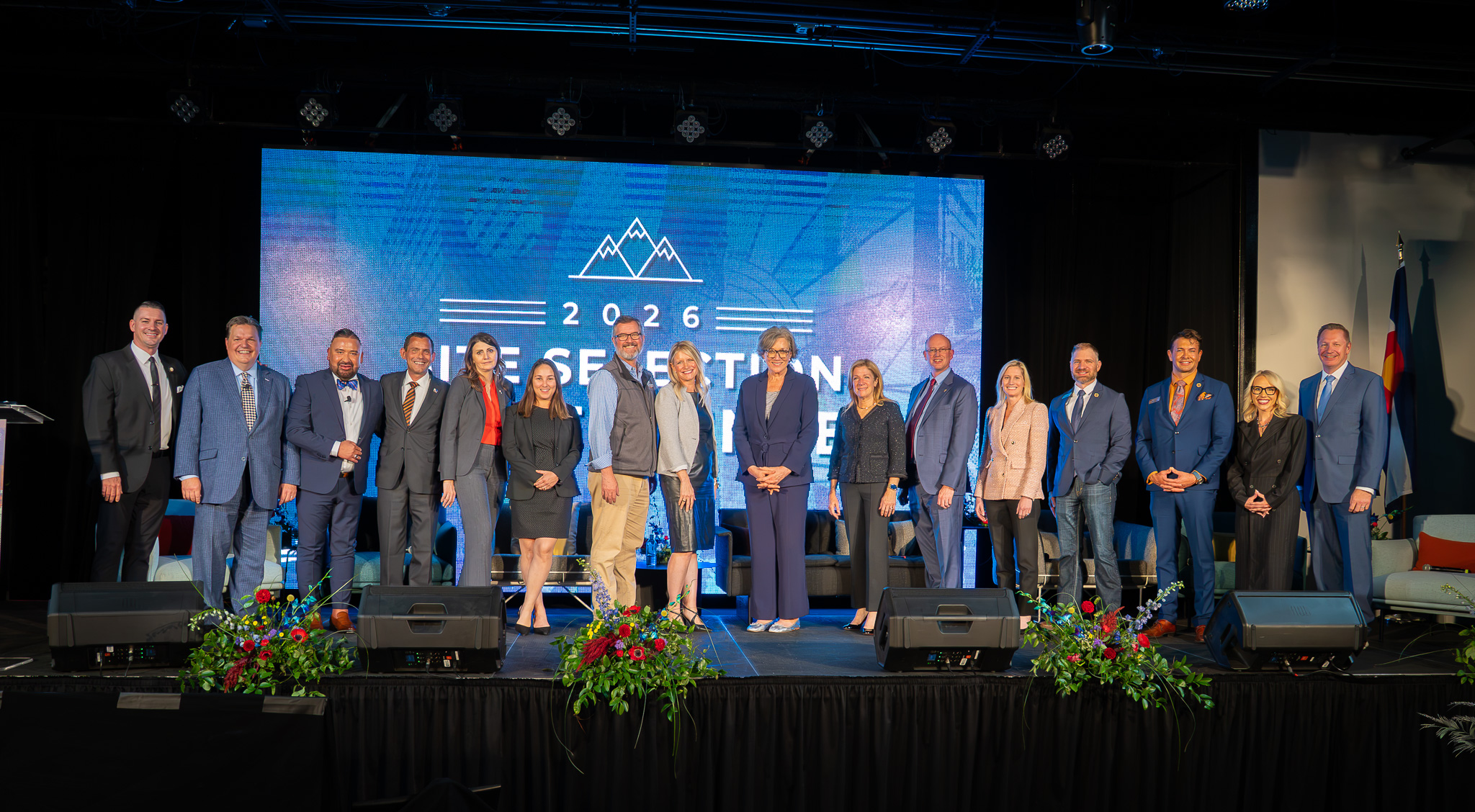
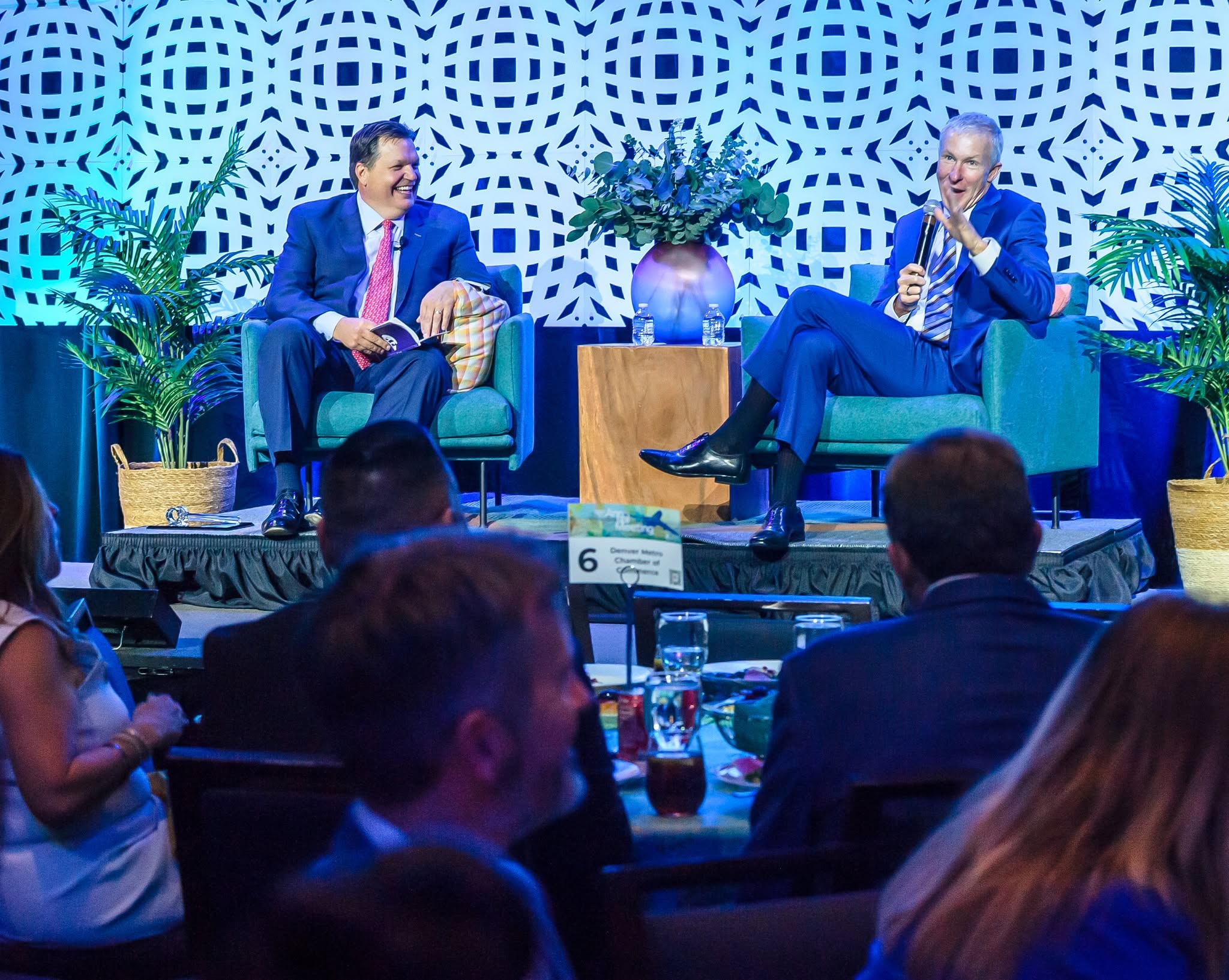
Hosted by the Denver Metro Chamber of Commerce (DMCC) and the Colorado Competitive Council (C3), the event brought together a legislative panel with Senate President James Coleman, Senate Minority Leader Cleave Simpson, House Speaker Julie McCluskie, and House Minority Leader Jarvis Caldwell, who addressed the economic pressures facing Colorado businesses and families, covering everything from budget constraints and regulatory growth to energy reliability, healthcare affordability, housing, and workforce development. The panel was moderated by Editor-in-Chief of Westword, Patty Calhoun.
The Metro Denver Economic Development Organization, the state's largest privately funded economic development body, also unveiled its 2026 Toward a More Competitive Colorado (TMCC) report, a rigorous evaluation of Colorado’s standing across 38 critical economic indicators. The findings present a tale of two economies: one distinguished by world-class innovation and a skilled workforce, and another struggling under the weight of infrastructure gaps and persistent affordability pressures that threaten to stall future investment. The report makes clear that policy decisions made during the 2026 legislative session will determine whether Colorado expands opportunity statewide or allows these pressures to deepen.
“This year the stakes are high” said Leslie Oliver, Vice President of External Affairs for the DMCC. “Colorado faces an $850 million budget shortfall-closing that gap must not close doors on jobs and growth, we have ambitious sustainable energy goals... and we have the opportunity to review critical regulatory frameworks, so we must be mindful of the actual impact and cost of compliance and regulations...”
The panel conversation highlighted the topics outlined by Oliver.
Budget Pressures and Fiscal Prioritization
With Colorado facing an estimated $850 million budget shortfall, legislative leaders acknowledged that budget decisions this session will directly impact economic growth, job creation, and affordability for Colorado families. Panelists discussed balancing fiscal responsibility with the protection of essential services that support working families and local economies.
Senator Coleman underscored the challenge of the budget, and acknowledged “this year our budget solutions have to be about cuts... Colorado families unfortunately will feel the impact.”
Speaker McCluskie homed in on TABOR, saying, “we have to not be fearful to talk about modernizing our current fiscal policy.” Speaker McCluskie stated she doesn’t want to get rid of TABOR, and she recognized the structural constraints of the majority of the State’s budget already allocated to education and Medicaid programs. "We just need to [think about government spending controls] in a more effective way that matches our constituents’ priorities.”
Regulatory Burden and Cost of Doing Business
Drawing from TMCC findings showing a decline in Colorado’s tax and regulatory competitiveness, panelists discussed the rapid growth of state programs and regulations and the need to evaluate their effectiveness. Lawmakers from both parties expressed openness to reviewing duplicative or burdensome rules that increase compliance costs without delivering clear benefits. Panelists noted that without disciplined regulatory review, well-intentioned policies risk increasing costs for employers and consumers, undermining economic mobility and competitiveness.
“Colorado must remain a place where businesses can grow and invest,” Oliver said. “Smart, predictable, and practical regulation helps employers focus on innovation, workforce development, and serving their communities—rather than navigating unnecessary complexity.”
Energy Reliability and Affordability
As Colorado advances toward ambitious clean energy goals, legislators emphasized the importance of maintaining reliable, affordable power for businesses and residents. Panelists highlighted the need to align long-term sustainability goals with grid capacity, affordability, and reliability.
Representative Caldwell emphasized his work with Colorado Springs Utilities, stating that many organizations want to meet ambitious energy goals, but they need more time. “We agree with your goals,” said Representative Caldwell, “but we just need a little more time because we’re worried about the affordability and the reliability.” Lawmakers from both parties emphasized that energy reliability and affordability are foundational to economic empowerment, particularly for small businesses, manufacturers, and working families facing rising costs.
Senator Simpson focused on the regulatory side of energy goals, saying, “There’s a distinction between goals and mandates.” He agreed with Representative Caldwell that, while Colorado has amazing resources, the state is not in a place to meet these goals yet.
Healthcare, Housing, and Workforce Challenges
The panel also addressed rising healthcare costs, housing affordability, and workforce pipelines, all of which are key barriers identified in the TMCC report. Legislators discussed efforts to control health insurance premiums, expand affordable housing options, improve transportation access, and strengthen partnerships between businesses, K-12 schools, higher education, and training programs.
“It doesn’t feel like we’re making significant movement and change in that space,” said Senator Simpson on the issue of housing affordability. Whereas Speaker McCluskie said she’s starting to see some improvement in housing in her counties along the Western Slope, despite still high housing costs: “patience may be a virtue for all of us right now to hold onto.”
“Our commitment is we continue to work with [businesses] as partners to find more ways for affordable housing projects,” said Senator Coleman.
“These challenges are deeply interconnected,” Oliver said. “When costs rise faster than wages and businesses can’t find or retain workers, it impacts the entire state economy.”
As the 2026 legislative session begins, the Chamber underscored that bipartisan dialogue must translate into policy outcomes that expand opportunity, protect affordability, and strengthen Colorado’s economic competitiveness. DMCC President and CEO, J. J. Ament, closed out the event. “Political unity really isn’t about agreeing about everything,” said Ament. “Certainly, at the Chamber it’s about Economic Empowerment for every Coloradan.”
Stay up to date with the Chamber’s stances this session and view the full TMCC report for more information on Colorado’s economic standing.