 Lance Enders, the Denver Metro Chamber’s vice president of membership, has in a way grown up alongside the Denver metro region. Nearly 27 years ago shortly after starting at the Chamber, he attended the grand opening of Denver International Airport.
“I remember thinking how amazing it was to work for an organization that had such a big role in making sure the airport happened,” he said.
Now, as he enters retirement this spring, he looks back with pride on all the Chamber has accomplished during his tenure.
“From Denver International Airport to the Convention Center and Mile High Stadium, I feel proud to look back and see that I raised money that helped shape this city,” he said.
Enders has played an important part in creating the culture that makes the Chamber a great place to work and building a cohesive sales and membership team that has consistently met their budget goals and increased Chamber membership.
“Lance has made a huge impact on the Chamber,” said Robert Kross, senior membership representative. “He took a chance on me and was the one who became a mentor and a leader for myself and was really able to guide me on a professional and personal level.”
Kross, along with Kathryn Williams and Carlos Garcia, were on Enders’ team over the last year during the pandemic, a challenging time for the business community and one where the Membership staff were even more instrumental in supporting our members.
“Thank you for supporting me through challenging times, your guidance, wisdom and for believing in me,” said Williams in a tribute to Enders. “I’ll never forget your contagious laugh, as it echoed down the hallway at the office, and how you listened intently when I came to you with issues and questions.”
During his tenure, the Chamber expanded the companies that became members, representing companies large and small that make up Denver’s diverse business community. One of Enders’ key responsibilities was cultivating relationships with these companies and demonstrating the value in a Chamber membership, something he did exceptionally well.
“I had been a member of the Chamber for almost 20 years at the time Lance joined the Chamber staff,” said Ned Minor, former Denver Metro Chamber of Commerce board chair. “Over these past 27 years Lance and I worked seamlessly together to recruit new members. Lance was perhaps at his best during tough economic times when retention was essential. Lance never disappointed me. Lance always made me feel appreciated and treated me as if I was the Chamber’s most important member. Perhaps this is part of his true legacy, his selfless gift of making everyone else feel like they are number one.”
Chamber President and CEO Kelly Brough started at the Chamber 11 years ago and said Enders has always had an unparalleled commitment to the organization and its members.
“Lance has touched so many lives in so many meaningful ways – not just through his work and passion for the Chamber but through his focus on building relationships with everybody he worked with,” Brough said. “His service to this organization and its 3,000 members was stellar. There wasn’t a single day he didn’t come in with a sincere commitment to our members.”
A life-long sports fan, Enders looks forward to relaxing, exercising and continuing to cheer on the Denver Broncos in his retirement. The culture of the Chamber has been forever shaped by Enders’ contributions. His commitment to Chamber members has cemented his legacy in the Chamber’s 153-year history.
Thank you, Lance!
SEE HOW OUR MEMBERS HAVE BEEN
virtually connecting and look to see where you can
engage at denverchamber.org/calendar.
NATIONAL EXPERTS OFFER INSIGHTS & ADVICE DURING EDC’S FIRST VIRTUAL SITE SELECTION CONFERENCE
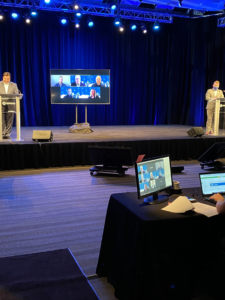 In September, the Metro Denver EDC hosted its annual Site Selection Conference – a series of conversations with national consultants who are hired by America’s Fortune 1000 companies to scout communities on their behalf. Site selectors joined the EDC to tour the Metro Denver region, meet with economic development partners and investor companies, get a broad overview of the business environment and regional assets, and
they offered insights and feedback as to how we, as a community, can best position Metro Denver relative to the needs of prospective companies.
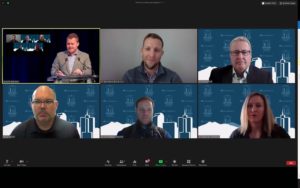 This year’s virtual discussions focused on the pandemic’s impact on economic development, new strategies for recruiting and retaining companies, job creation and our region’s position on expansion and relocation relative to the nation’s top metropolitan areas. One theme consistently rose to the top of our conversations – talent. A focus on people is paramount to helping their clients either choose Colorado – or another state for relocation and expansion. Check out the recap video for 10 key takeaways of the panel.
COMMUNITY CONVERSATIONS ON ISSUES OUR COMMUNITY IS FACING AT THE LEADERSHIP FOUNDATION’S VIRTUAL VOICES
 Our Denver Metro Chamber Leadership Foundation’s Virtual Voices aims to keep alums informed and engaged as our community works through this challenging time. Each virtual meeting brings together leaders on the front lines of impacted industries to share their knowledge, perspectives and leadership lessons. Alumni have convened to talk about mental health, how to talk to their kids about race, creating an inclusive workplace, the power of storytelling and more! Join the upcoming Virtual Voices on Technology Today on Nov. 12.
WELCOMING NEW IMPACT DENVER AND LEADERSHIP DENVER CLASSES
This past September our Denver Metro Chamber Leadership Foundation virtually kicked off the Impact Denver fall 2020 class and Leadership Denver 2021 class. Throughout their program experience leaders will dive deep into issues facing our community, work on group projects, connect with civic leaders and grow their network. We’re excited to see what these leaders will accomplish.
Interested in taking the next step in your leadership journey? Check out the Leadership Foundation’s programs to see which program is right for you.
Applications are open for Access Denver, Colorado’s’ Civic DNA Fellows and Impact Denver spring 2021 class .
CONNECTING BUSINESS AND POLICY AT COLORADO COMPETITIVE COUNCIL’S (C3) BUSINESS BASECAMPS
 This year C3’s Business Basecamp had to adapt due to COVID-19, and it was able to continue forward in a safe, responsible and fun way. Over four basecamps, participants were hosted by Representative Perry Will (R-57) and Representative Julie McCluskie’s (D-61), Representative Mark Baisley (R-39) and Senator Tammy Story’s (D-16), Matt Soper (R-54) and Representative Janice Rich’s (R-55), and Representatives Yadira Caraveo (D-31) and Kyle Mullica’s districts (D-34). They were able to learn about local districts — from local business at the top of Breckenridge Mountain to touring the housing development Sterling Ranch to visiting a working cattle farm and riding RTD’s newly opened N Line.
FOOD AND BEVERAGE COMPANIES WERE ON THE MENU AT DENVER STARTUP WEEK
 Trout Tank CPG Pitch Event highlighted consumer packaged goods (CPG food) and beverage entrepreneurs and businesses in Colorado, giving them opportunities to sharpen their pitching skills, gain exposure, secure funding, and build connections with lenders, investors, decision-makers and key stakeholders within the Colorado business and investing community.
During Denver Startup Week, four companies showed off their innovations in the CPG food and beverage space. Sweet Logic, Patterbar, Green Belly Foods and Mad Lemon competed for a prize pack worth over $3,000 with Sweet Logic taking the final prize.
Applications are currently open for Trout Tank H2O. All businesses with a focus on water, new or old, can participate in order to sharpen pitching skills, gain connections with expert mentors and get awesome exposure opportunities, along with a $5,000 cash prize!
A PEW RESEARCH STUDY REPORTS MORE than half of Americans find the internet to be essential during the COVID-19 outbreak. This finding is not surprising to many people who are reading this magazine; as business leaders and parents who are working and managing learning from home, we know a home internet connection is needed now more than ever. Just pause for a moment and imagine life without internet at home.
While COVID-19 and the related stay-at-home orders put a spotlight on how critical it is to have access to technology and a reliable, high-speed home internet connection, the crisis also exposed even further the cruel irony of the digital divide. Those with home internet connections benefit from all the opportunities of a digital world, but those without fall even further behind.
Some of our most vulnerable populations include low-income and refugee families who suddenly have to adapt to online learning and figuring out how to work from home or search for work virtually for the first time, and seniors who need to stay connected as they isolate away from loved ones can particularly benefit from home connectivity.
How can we come together as civic leaders to address this need to better serve our community? Here are some ways we can work together to ensure greater digital equity and inclusion.
Comprehensive Approach To Digital Inclusion
In order to address the digital divide, we need to think of the issue as more than just a physical home internet connection. There are multiple barriers to connectivity that come into play and make up the reasons why an individual or a family may not have a home internet connection.
Some people lack the digital literacy to understand the benefits a home internet connection can provide. They may not fully realize the equalizing power the internet can provide to them and their family, enabling someone to obtain critical computing skills, search for jobs, access news and health care information and so much more.
Others may only have a smart phone or tablet at home and lack affordable hardware like a laptop or desktop computer. An internet connection is only as good as the device by which it is accessed.
And for others, the price of internet service may be the determining factor. Many people are balancing bills and are unaware of more affordable home internet options.
The good news is that there are numerous broadband companies and various internet offers available to low-income families throughout metro Denver. Comcast, for its part, has offered its Internet Essentials program for nearly a decade. The program is designed to be a wrap-around solution to directly confront every barrier to digital adoption by offering affordable internet at $9.95 per month, subsidized computers and free digital literacy training to eligible low-income families.
If we’re going to build digital equity in Colorado, we must address all three of these barriers and work together to educate our community on the importance of a home connection.
Public-Private Partnerships
As a leader in our community, I know you can appreciate the magnitude of this challenge, and that it’s one requiring all of us to work together to address.
At Comcast we’re constantly evolving our Internet Essentials program to better meet the needs of the community. In March, following the COVID-19 outbreak, we began offering Internet Essentials free for two months for new customers – an offer that will remain available through the end of the year.
We aligned and collaborated with a lot of help from elected officials, school districts and foundations and the nonprofit community to ensure we reached all families and individuals in our community.
We also partnered with nearly a dozen organizations to further cover the cost of home internet connectivity for Internet Essentials-eligible individuals and families who need additional financial assistance through our Internet Essentials Partner Program. The program, which relies on public-private partnerships, enables companies or nonprofits and other organizations to coordinate funding to help connect those who may still be unconnected.
Through creative solutions with local partners, together we’ve connected thousands of people to the power of the internet since March – many for the very first time.
We still have work to do to reach those who remain unconnected; and to ensure they gain the digital skills necessary to learn, work, and access health care and other vital services online.
School districts, foundations and nonprofit organizations cannot take on this massive task their own. And, we as business and community leaders can’t address it on our own. We all have a responsibility to re-imagine how we work together to help raise awareness about the need for connectivity, as well as ensure more people know about what programs and resources are available.
Everyone should have access to the opportunities made possible by having the internet at home. We hope as fellow civic leaders you join us in this work to build digital equity, as when our communities thrive, so do we.
In addition to welcoming Trey Rogers as the chair of the Denver Metro Chamber, its family of organizations – the Colorado Competitive Council, Denver Metro Chamber Leadership Foundation, Denver Metro Small Business Development Center and the Metro Denver Economic Development Corporation – all welcomed new board leadership. They’re part of our collective work to make Colorado a great place to live and do business. Get to know these incoming leaders.
Colorado Competitive Council Chair
Beverly Razon
Senior Vice President of Public Affairs COPIC
 After being engaged with C3 for more than 10 years, “I am excited and humbled at the opportunity to support [C3 Director] Lauren Masias in leading it forward,” Razon said.
And, Razon is ready to get to work: “This unprecedented time presents unprecedented opportunity for C3 to collaborate with, support and represent businesses across the state at the Capitol. This is critical to ensuring Colorado’s policies work to lift up the recovery of our economy in order to keep our citizens working or get them back to work. C3 is well-positioned to represent this statewide voice as we work through thoughtful, balanced policy with our elected leaders on the many issues we know are ahead of us.”
Denver Metro Chamber Leadership Foundation Board Chair
Anthony Graves
Principal, GRAVES CIVIC SOLUTIONS, LLC
 A longtime speaker at the Leadership Foundation’s Leadership Denver program days, Graves has engaged more deeply with the organization as a board member since 2015. A member of Mayor Michael B. Hancock’s cabinet for seven years, Graves recently launched a public affairs and economic development consultancy, and he’s seen an outpouring of support – something that makes doing business in Colorado special: “I love the focus on building long-term, authentic relationships and the personal interest that business leaders take in one another,” Graves said.
But with dual challenges of combatting coronavirus and racial injustice, Graves said the Leadership Foundation, which works to educate and inspire leaders to make a difference in the community, is critical: “This confluence of crises has underscored the importance of developing a pipeline of leaders in our society who can address the intractable challenges of today and prepare for the unknown challenges of tomorrow,” he said.
Denver Metro Small Business Development Center Board Chair
Rob Smith
Executive Director of Rocky Mountain MicroFinance Institute
 Smith returns as Denver Metro SBDC Chair, a role he’s held since 2018: “Ensuring small business has a voice at the table is incredibly important to me.”
“Colorado has a ‘go for it’ spirit,” he said. “If we don’t know how to do it, we figure it out (and we do a really good job at it). There has been a lot of damage done as a result of COVID-19 and the waves of uncertainty and fear it brings, and we’ll see a fundamental re-orientation of our economy as a result. We’re an entrepreneurial state, through and through, and I’m excited to support our path forward through the incredible adaptability and resilience of our small business community.”
Metro Denver Economic Development Corporation Incoming Executive Committee Co-Chair
April Giles
Vice President of Business Development for the Fitzsimons Innovation Community
 Coloradans are up for any challenge, and that’s why Giles loves living and working here: “Time and time again when we call on our community to step up, lead, solve, inspire, mentor – you name it – Coloradans will join in to contribute,” she said.
And, Giles has seen that in action at the Metro Denver EDC. “Issues, such as workforce development, transportation, housing, arts and culture, are at the forefront of their work. Metro Denver EDC intuitively understands that by optimizing complementary economic development ‘systems’ we invest in long-term sustainable results,” she said.
And, she’s proud to serve an industry working on the frontlines to stop the pandemic: “They’ve rolled up their sleeves to serve. Colorado has a number of bioscience companies and hospital systems with high national regards for their work to provide diagnostic tests, leadership on vaccine clinical trials and their daily care of COVID-19 patients.”
Metro Denver Economic Development Corporation Incoming Board of Governors Co-Chair
Paul Washington
Market Director at JLL
 In the year ahead, Washington said he sees a unique opportunity “to brand the Denver region as a thought leader in how it will operate and compete in a post-COVID virtual economy.”
Washington first got to know the Metro Denver EDC as the executive director of Denver’s Office of Economic Development, where he saw how the Metro Denver EDC’s approach – of collaboration and coordination among the companies and municipalities from across the metro area – “distinguishes the Denver region from its competitors.”
And it’s that attitude – “the general culture that people are here to help and that we are in the process of really defining ourselves” – that Washington says makes Colorado a great place to live and work. “This allows for everyone to participate in the legacy of this state,” he said.
Colorado Leads in Race to Train, Attract and Keep Strong Workforce
In a knowledge-based economy, talent drives success.
As businesses compete for that talent and look for ways to stand out from the competition, a number of organizations have emerged to help companies find the right talent at the right time. Unsurprisingly, many of those organizations are popping up in Colorado – a place known not only for its low unemployment (which in October dropped to a historic low of 2.6% statewide and 2.3% in Metro Denver) – but also for an entrepreneurial spirit that drives innovation.
Meet the Chamber investors who are betting that their talented teams can help others grow, attract and retain the workers they need, now and into the future.
Growing Talent with Apprentices – in Unexpected Industries
Homegrown talent is a coveted asset for any business, and CareerWise Colorado is helping businesses – particularly those in areas of tech, professional services and health care – explore apprenticeship as a way to grow that talent.
In November, CareerWise and the Chamber announced a partnership to provide 100 modern youth apprenticeship opportunities in 2020.
“Workforce innovation starts with the Chamber,” said CareerWise CEO Noel Ginsburg. “The membership is already leading the way on a number of development and advocacy issues. With this partnership we hope to harness that leadership and supercharge the momentum we’ve been building around youth apprenticeship since we launched three years ago.”
CareerWise apprentices are already onsite with more than 100 companies in modern job functions such as financial services, business operations and IT. Apprenticeship is a work-based learning model that prepares workers to step into full-time roles by having them perform meaningful, productive work and complete related classroom instruction.
“As you think about the future of work and the future of workers, how do we bring the right people with the right kind of training to the fore so that we can continue to thrive as businesses in a vastly changing business environment?” asked Pinnacol Assurance CEO Phil Kalin.
That’s where apprenticeship has come in – and Pinnacol has apprentices serving 23 departments, from customer service to IT.
“CareerWise is bringing together our companies and our youth to create more pathways to meaningful careers – that’s a win-win,” said Chamber President and CEO Kelly Brough. “We have to make a systemic change in our educational system where we recognize that earning while we are learning is a powerful way to meet our future workforce needs.”
Creating a More Inclusive Hiring Process
In an age of ever-evolving technology and disruption, employers are finding they not only must innovate in their work but also in how they recruit their workforce.
Organizations like Skillful and Checkr are helping businesses rethink their hiring processes to build stronger teams.
“Given the labor shortage in the U.S., we see an increasing appetite among our companies across many different industries to expand the talent pools that they’re looking at and think about nontraditional sources of talent,” said David Patterson, HQ2 site lead and head of communications for Checkr, a San Francisco-based background check company that announced its expansion to Colorado in April.
Checkr uses artificial intelligence and machine learning to bring more people, including those with criminal backgrounds, into searches for open positions. While companies still have the ultimate control over their search criteria, Patterson says Checkr’s process is more data-driven and reduces bias in the hiring process.
“(Businesses) can have a more open or a more inclusive hiring process for specific roles based on business needs, and once they make that effort to hire a broader, more diverse candidate pool, they often find that what we call ‘fair-chance’ employees … tend to be very loyal, very talented,” Patterson said.
Skillful is also helping businesses, particularly small- to medium-sized businesses, “to recruit, hire and retain a skilled workforce, and the way we do that is a skill-based approach,” said Jacob Vigil, Skillful’s senior manager of its employer initiative.
That means helping employers understand what skills or experiences are needed for a job, rather than focusing just on an applicant’s credentials. Skillful helps employers reframe their hiring process, from how to write a job description or conduct an interview to onboarding and retention strategies.
“It reduces bias and creates more equitable job markets that filter in for jobs rather than filtering out,” Vigil said.
Colorado is the first place that Skillful, an initiative of the Markle Foundation, has deployed a team. It was a decision that made perfect sense given the low unemployment rate and high demand for talent, Vigil said. And, they have partnered with the Chamber to share these tools with more businesses.
“Employers are more open to looking at new ways to widen their talent pool and fill those roles, so this makes (Colorado) a perfect test bed for developing and employing new practices and talent management tools,” Vigil said.
Since launching in Colorado in 2016, Skillful has trained more than 2,400 employers along with 70 career coaches who serve some 5,700 job seekers. They also have expanded to Indiana and launched a network with 27 states, which means lessons from Colorado are being used to inform workforce development in much of the rest of the country.
Creating Opportunities for Ongoing Learning
Renewable learning is emerging as an essential behavior for workers, and according to Pew Research Center, 87% of workers believe that ongoing training is what will ensure they keep up with our changing workplace.
It’s not a bad bet, considering that human knowledge is doubling every 13 months and IBM anticipates that in the coming years the volume of information will double every 11 hours. But the challenge remains that some 88 million Americans need reskilling and upskilling.
Enter Guild Education. The Denver-based company has taken the traditional corporate tuition reimbursement program and layered technology, coaching and a broad array of academic opportunities – ranging from high school diplomas to four-year degrees – to enable frontline workers at Fortune 1000 companies like Chipotle and Walmart to get the education they need to advance and grow.
“At Guild we’re bringing employers and universities together to give everyone a chance to succeed in higher education and prepare for the future of work,” said Zoe Weintraub, Guild’s vice president of business development and communications. “Guild’s higher education programs offer a win-win for employers and their employees.”
Their data shows that employees pursuing their degrees through Guild are 2.7 times more likely to retain at work than their peers and 44% more likely to receive a pay raise than their peers. Meanwhile, employers using Guild stand out from others – and have seen a 20-25% increase in job applicants after launching a partnership with Guild.
Why Colorado?
As companies like Guild and Checkr help others grow their talent, they say Colorado is the perfect place to grow their businesses.
Just this year, Guild has grown to more than 400 employees, expanding 120%, Weintraub said. The company also reached a $1 billion valuation, one of the few led by a woman – Colorado native Rachel Carlson.
“Rachel recognized Denver’s entrepreneurial spirit and knew it was a place where a budding business could thrive,” Weintraub said.
Patterson agreed, noting that Checkr chose Denver because of its collaborative nature, great business climate, and, most important, “there’s a really strong, homegrown talent pool.”
Need to grow your business' talent?
Partner with the Chamber and CareerWise to develop your talent pipeline through modern apprenticeships. CareerWise will help recruit, develop a training plan based on your needs and serve as a support as you launch your apprenticeship. Learn more: Contact Sammy Smith at sammy.smith@denverchamber.org or 303-620-8050.
Looking for a resource as you evaluate your hiring process? Join the Chamber and Skillful for its Talent Series, which kicks off Jan. 30. The series is complimentary for Gold members and above. Learn more or register at denversbdc.org/skillful.
Sara Crocker is the communications manager for the Denver Metro Chamber.
What do you stand for? It’s a simple question, but one you don’t often have to answer until you’re in a complicated situation.
My father always reminded me that the greatest asset we have is our reputation. When I graduated from Colorado State, he wrote me a note that I won’t forget: I have given you something to protect and cherish. It’s your name: Hottman. Whatever you do in life remember that your actions will impact how people perceive you.
He was right. And to take it a step further, our values – what we stand for – inform our actions.
Lately, I’ve been thinking a lot about the values of Bill Daniels. I never had the pleasure of meeting Bill but have long known about his business acumen – and the principles that guided his work.
The Daniels Fund Ethics Initiative carries forward in its work those eight principles – integrity, trust, accountability, transparency, fairness, respect, rule of law and viability. I’ve been thinking a lot about them since being named the 2019 Bill Daniels Ethical Leader of the Year by the Daniels Fund Ethics Initiative (DFEI) at the University of Colorado Denver Business School.
At Plante Moran, our values and our work similarly start with integrity. And those values guide how we make decisions. Every day we all come across situations where we have to make a decision. Your principles will guide how you make those decisions. During my career, I have found that people like Bill Daniels, who make decisions that focus on the needs of others instead of their own, make strong, ethical decisions.
Strong values make decisions easier, but at the end of the day it’s about the people – our employees, our clients and the community. We want to make sure our community is better off because we are here. We want to make sure our clients have all the information and advice to navigate tough decisions. We want to make sure our employees have the tools and support they need to succeed. That focus on the needs of others is the basis of servant leadership. I have been fortunate in my career to be surrounded by many people who believe in serving others, not themselves.
By definition, if you are a leader people will follow you. You can’t create a true following using your title alone. If you put the needs of others before your own and you’re clear about what you stand for, people will follow you.
So, how do you want to be remembered?
Bob Hottman, partner at Plante Moran
Your family likely has an emergency plan in place for severe weather. What about your business?
We've all heard the age-old saying: “Prepare for the worst, expect the best.” It seems like each year Colorado brings even more unpredictable weather, and with it dreaded network service outages that seem outside of our control. For Denver metro area business owners, losing access to their network would almost certainly hurt their bottom line.
I recently spoke with a customer who runs an IT services company. On a clear day in the heat of the summer, their area experienced a “brownout” – where less power is delivered to homes and buildings – due in part to high air conditioner usage, causing too much stress on the power grid. They were unable to make and receive sales calls for a full day, setting their business back an untold amount of dollars. Data show that businesses lose between $926 and $17,244 for every minute their operations are stalled. This could have been prevented.
Fortune favors the prepared. It’s clear that a business’s ability to remain operational during an outage could make or break their overall success. As you prepare your business for the worst, here are a few considerations for your checklist so that you can expect the best.
1) Make sure your network equipment is up to date. Often, businesses are so focused on their day-to-day success that they don’t stop to consider whether their internet is scaling with them. Equipment failure is a common cause of network outages and caused 40 percent of all reported downtime, according to a recent study. Think of your network equipment like a rubber-band – if you stretch it too wide, it’ll snap. Customers tend to forget that a state-of-the-art network requires equally cutting-edge equipment to physically support it.
2) Avoid network overload. If you’re a small business owner, your network may be only capable of handling a few employees online at a time. But what if a client comes into the office, or you experience a day with higher than normal traffic? In today’s connected era, it’s not uncommon for a single employee to have several connected devices on hand at any given moment. Double-check to make sure your network isn’t on the edge of its bandwidth.
3) Have a backup plan in place. Worst case scenario, the Metro Denver area experiences a power outage outside your control and your network goes down indefinitely. Cutting-edge tech has made it possible for your internet to stay on, even when your power goes out. Talk to your network provider about an automatic backup internet connection to ensure that your business keeps running smoothly, regardless of factors like weather, human error or severed power lines.
The bottom line is some aspects of network outages are within our control, but others are not. Running a business can be challenging and unpredictable, but in 2019 and as you look toward 2020, your internet access should be a sure thing. Plan ahead with your provider to make sure your network can support your business through even the heat of the summer or worst bomb cyclone – you’ll be glad you did.
Robert Thompson, is the vice president of Comcast Business, Mountain West Region