Our companies have been giving back to their community for generations – and today, it’s not only considered cool but expected – 86 percent of U.S. consumers expect companies to do good (specifically to take action on social, environmental or other community issues). Our members continue to lead in this arena, recognizing that their corporate giving and community service strategies are key to attracting the very best workers. (In fact, 79 percent of Millennials consider a company’s social responsibility track record when deciding where they will work. And once they’re on a team, that connection keeps them engaged – reducing employee turnover by up to 50 percent.)
This commitment is why our Chamber was a founding member of B:CIVIC and a big part why we married the work of B:CIVIC with our Leadership Foundation last fall. B:CIVIC helps companies of all sizes develop their strategy for how they want to engage their team, give back to our community and have a meaningful impact. And, we are always looking for ways to shine a spotlight on the incredible work our companies are engaging in – it’s why we are helping launch The Civic 50 in Colorado.
What is the Civic 50? It’s like the Good Housekeeping Seal of Approval (OK, you have to be over 50 to even know what that is, so ask someone in the office to explain it to you) for corporate responsibility. It’s a consistent way to measure on a national level for corporate citizenship. And, when companies achieve this level of standard – it is really stellar. Colorado has been chosen as the second community in the country to offer a regional version of The Civic 50. Our local version will be launched in partnership with B:CIVIC and CSR Solutions, allowing us to recognize the best of the best in Colorado.
There’s lots of ways you can get involved. No matter the size of your company, we want to hear about what you’re doing in the community. Join B:CIVIC on April 24 for its networking happy hour, Sparks ‘n Sips, to learn more about The Civic 50 and how you can apply. Colorado honorees will be recognized at the B:CIVIC Summit in September.
Get ready to hear some amazing stories. We are already seeing a number of our members achieve this level of recognition as national Civic 50 honorees – Aetna, American Express, AT&T, Bank of America, Charles Schwab, Comcast, Deloitte, FedEx Corporation, GE, Hogan Lovells, IBM Corporation, KeyBank, KPMG, PwC, S&P Global, Southwest Airlines, UnitedHealth Group, Verizon, Wells Fargo and Western Union. Get inspired by their work by learning more about their approach to giving back here.
We hope you’ll join us at the Civic 50 kickoff and join the work of B:CIVIC. Chamber members can use the promo code Chamber1 to attend at no charge.
Kelly Brough is the president and CEO of the Denver Metro Chamber.
A healthy community fosters strong businesses. We all have the ability to positively impact our community – and we have some tips and resources to help get you started. You may be surprised to learn that you don’t have to have a lot of time or money to be socially responsible and give back to the community. If you or your company doesn’t know where to start with corporate social responsibility, we’re here to help.
When a company is civically engaged, not only does it benefit the community, but it also benefits the business and its employees. “There has been a shift away from ‘it’s a nice thing to do’ to ‘it’s something that companies must do (to stay competitive),’” said Joyce Witte, founder of Corporate Community Investment Network, a predecessor of B:CIVIC, a new partner of our Denver Metro Chamber Leadership Foundation that is committed to increasing corporate social responsibility by providing tools for companies of all sizes to meet the growing expectations of their customers and employees.
In fact, 86 percent of U.S. consumers expect companies to act on social, environmental or other community issues. Cone Research found that 79 percent of people prefer to work for a socially responsible company and 79 percent of employees think it’s important that their companies match their charitable giving. According to the first-of-its-kind Good Business report – developed in partnership by the Chamber and B:CIVIC – 93 percent of companies in Colorado that gave in-kind services did so in the state.
The Chamber was a founding member of B:CIVIC in 2013, and the Leadership Foundation and B:CIVIC have a history of working toward a similar mission to strengthen Colorado through community leadership and social responsibility.
So, what is CSR?
Corporate social responsibility (CSR) is an opportunity for a for-profit organization to give back to its community and be socially accountable to itself, its employees, customers and the public. CSR practices can enforce a stronger bond between employee and corporation; they can boost morale and productivity; be more desirable for clients and potential employees; reinforce brand reputation; and build trust within your community.
Small businesses – those with fewer than 100 workers – accounted for 98.2 percent of employers in the U.S. in 2016. “With numbers like that, we must provide small businesses the resources to be successful in giving back to their community and benefiting from the employee and customer loyalty CSR offers,” said Kirsten Vermulen, executive director of B:CIVIC.
Similarly, Colorado’s economy is fueled by 1 million small business employees. “It’s imperative – businesses are a tool that we can use to do good,” said Adam Odoski, co-founder of Denver-based Good River Beer. “It’s a way to give back and promote a healthy and sustainable community – environmentally and socially. It’s our responsibility as members of the community to give back to where we live. We should be giving back more than we take to make it sustainable.”
Here are five of the major ways that small (or large) businesses can start giving back:
Make it a priority from day one.
“(Good River Beer) started with a different business model. We started with distribution first and without a taproom,” Odoski said. This allowed them to focus on getting their beer to consumers without the overhead, allowing them to commit 2 percent of their gross revenue primarily to American White Water and Colorado Water Trust. The result, a nonprofit dubbed 2% for Rivers, was created with the mission to protect clean, healthy river ecosystems and promote responsible recreation access. And, Good River Beer is doing just that – along with
brewing good beer.
Similarly, 34 Degrees – a cracker and snack company – has been giving back since its inception. “It was woven into the fabric of the company,” said Jenny Cavanaugh, culture and community manager for 34 Degrees. “At the beginning of every year, we put volunteer days on the calendar and account for it in our budget.”
Start small.
“Pick a cause you’re passionate about and just do it. Don’t overthink it; don’t over analyze it. If you need to start off small, great – do it small. Every dollar or bit of time helps – it goes a long way,” said Odoski.
After participating in the Denver Metro Chamber Leadership Foundation’s Leadership Denver, Tom Brinegar, VP and CFO of PEAK Resources, Inc., became more prescriptive around community engagement and how to have a bigger impact. PEAK Resources, Inc. employees wanted to engage in their own community (where their office is located, in Valverde), so they got involved with Denver Public Schools, volunteering as a group on a regular basis.
“It’s also a huge team building experience,” Brinegar said. “When you’re back in the office, you’re having more of a personal relationship with colleagues. It does resonate with people.”
Align with your mission.
“Food security is a huge focus for us. It’s part of our mission and connection to the food world outside our world of selling crackers,” Cavanaugh said. 34 Degrees is “committed to donating 1 percent of baked crackers to organizations to fight hunger.” They have close relationships with Food Bank of the Rockies and Project Angel Heart but are always looking to find organizations that can benefit from donations.
As a technology firm, PEAK Resources, Inc. presents a four-year scholarship to assist college-bound students from KIPP Collegiate who are interested in pursuing a degree in the technology field. “Having our employees being able to feel part of that is a huge benefit to us,” Brinegar said.
Think past the cash.
“You can do this without setting aside a cash amount,” Witte said. “Donate goods or services or give your employees volunteer time – either as a group or individually.”
34 Degrees provides two days per year for each employee to volunteer in addition to a companywide group volunteer day. “This gives people the opportunity to give back to other organizations they feel passion about,” Cavanaugh said. PEAK Resources, Inc. and Good River Beer also give their employees volunteer time off each year to follow their own charitable passions.
Engage your employees.
“Take the time to go to (your) employees first. I don’t think you can be successful if you don’t get employee buy-in from the very beginning,” Brinegar said. Ask your employees what they want to invest in (that aligns with the mission for the organization) and encourage employees to step up and get involved in the planning. “Find a way to enable people to be that champion within your company.”
It’s also a great way to “recruit, retain, increase engagement and increase productivity within your staff,” said Witte.
According to Project ROI, a well-designed corporate social responsibility program can:
And, that engagement makes good business sense, too, these small business leaders said. “It gives legitimacy to the business side,” said Cavanaugh. “And, it seems to be more meaningful when there is a connection to how you’re making money and how you’re making change to the world.”
Maggie McEntee was the digital communications and brand manager for the Denver Metro Chamber.
As March Madness kicks off, it's a month of pure competition. When it comes to business, success is based off how you can rally your team, get a game plan and execute. Here are four lessons that you can take from the court to your boardroom.
Teamwork makes the dream work
No team can take home the championship title without working together. Even with a superstar, a team won’t win without accountability and passion for the job they need to do. Whether you’re on the court or in the office, teamwork is critical to creating culture, encouraging healthy risk-taking and building trust.
Chamber tip: A collaborative culture fosters effective teamwork. Check out why culture is your new HR for more tips on how to develop your company culture.
Don’t underestimate the underdog
It isn’t March Madness without an upset or two, shattering everyone’s brackets. This goes to show that you can’t underestimate the underdog, and that’s just as true for business.
In every industry, there are companies large and small, but that doesn’t mean small businesses should feel intimated. You can still build a deep bench with peers and experts, even if they’re not on your staff. The more people you have in your court the greater chance you have to succeed.
Chamber tip: In order to compete with the number one seeds, small businesses need a strong business strategy. Be a part of the Small Business Development Center’s Leading Edge for Entrepreneurs to get a leg up on the competition.
Leave it all on the court
When the final buzzer goes off, that’s it. Each team has 40 minutes to take home the championship and not a minute more. There’s not much time to shake off previous losses or setbacks; what matters most is what happens in the moment. In business, you don’t get a second chance to make a first impression with your customer. Make that impression count, whether it’s through great customer service or a recognizable brand. Treat every customer interaction like the game winning shot.
Chamber tip: Your brand is the first impression that customers have with your company and helps your organization stand out in the crowd. Here are three ways to build your brand recognition.
Don’t be afraid to pivot
It doesn’t matter what the score is at halftime, the final score is what matters. If your team is down you can still make a comeback. You can change your game plan. Pivoting can ultimately make a business more successful. It can open your business to new customers, light a fire under your employees and encourage them to look towards the future. Be willing to make that pivot because you never know what the outcome will be.
Chamber tip: The best businesses have a game plan to be successful. Join the Small Business Development Center’s Start-up Track to discover how to position your business for success.
Laura James is the senior marketing and specialist for the Denver Metro Chamber of Commerce.
Telecommuting, also known as teleworking or remote working, is a global professional trend on the rise across businesses large and small. In fact, studies show that 70 percent of people globally work from home at least once per week. Factors like the cost of child care, chronic health problems, lengthy commute times and distracting environments are driving more employees to pursue flexible work options.
And, with the number of U.S. workers who work at least 50 percent from home or another remote location growing by 115 percent from 2005 to 2015, this trend is one to watch in 2019 and in the years to come.
Here’s what it means for your business:
1. Increased productivity: Allowing employees to work remotely helps them to avoid hectic commutes and distracting work environments.
Without the interruptions that come with a traditional office setting, telecommuting increases employee efficiency and provides workers with the opportunity to use time more efficiently to get work done while balancing their everyday lives. Cloud storage, video conferencing and other smart office solutions are keeping teams connected and well-resourced from afar, allowing for seamless collaboration.
2. Talent recruitment: You are no longer limited in your employee recruiting to the surrounding area. With teleworking as an option, you can attract top talent regardless of location.
3. Talent retention: Employees who feel they have a flexible work environment and the ability to eliminate distractions are generally more inclined to stay with a company long term. Several studies link telecommuting options not only to increased productivity, but also to improved employee satisfaction and loyalty.
4. Overhead savings: Working remotely allows employers to save on office space costs, supplies and janitorial services. And, services like Comcast Business’ Cloud Solutions help teams share information, sync schedules, process important documents and back-up everything in realtime without needing to be onsite, streamlining processes to help cut costs.
While there are many benefits for employers and employees when it comes to telecommuting, there are a few considerations to make before offering this perk to your workforce.
1. Isolation: To avoid excessive distance or feelings of isolation with remote workers, virtual meetings and webinars can provide opportunities for team interaction from different locations. Versatile phone services, such as Comcast Business’ VoiceEdge, keep employees in touch with ease. Features like online voicemail and digital portals make sure messages are never missed, and one-click conferencing capabilities provide instant access to host or join meetings. Occasional in-person meetings for holiday parties or training sessions can help as well.
2. Accountability: It’s important to put certain measurements in place to monitor performance and accountability for remote workers. Through daily contact or activity reports, you can ensure employees are completing their work in a timely manner.
As the future of the workforce evolves, look out for trends like this that benefit not only your business, but also your employees’ wellbeing. Keep up with the latest trends and resources from Comcast Business at cbcommunity.comcast.com.
This article was written by Comcast Business.
Businesses Finding Success – and Making a Big Impact
Small business continues to play a big role in Colorado’s economy, employing 1.1 million people and representing 99.5 percent of businesses. But, something bigger happens through these businesses, says Colorado Lending Source Executive Director Mike O’Donnell.
“I’m of the opinion that if you work for yourself or you create your own business you’ll be 100 percent engaged,” O’Donnell said, “and the small group of employees you build around you will more than likely be very actively engaged.”
What makes a business successful – transforms it from an idea to an actual product or service that makes a difference and builds a career for others? Four business owners share their stories – of start-up, of buying a business and of growing and securing the funding to match their customers’ needs.
Cooking up a new kind of fast-casual
Fetien Gebre-Michael’s business may be small, but she’s thinking big – and she wants to build the Chipotle of Ethiopian cuisine here in Colorado.

“I’m dreaming big,” she said.
With 11 siblings, Gebre-Michael only knows how to cook for large groups – something that came in handy when she started producing events. And what started as a side gig while she went back to school has become Konjo Catering and Events, which also boasts a food truck.
She wowed the judges at the Denver Metro Small Business Development Center’s Trout Tank: Food Frenzy with her Ethiopian cuisine and her vision for a fast-casual concept honoring her African heritage – an idea that she honed through Trout Tank and a loan readiness program, Scale Up.
Through Trout Tank she gained mentors from restauranteurs and concessionaires like Mission Yogurt, Maria Empanada, Punch Bowl Social and Larimer Associates, who she says still take time to talk through business challenges with her.
“It was about the connections I could make,” she said, adding that, “it was a confidence booster, too.”
And, immersing herself in several startup accelerators “really pushed me to say OK, you have to get your stuff together.”
Trout Tank also created an introduction to a lender – she is working to secure funding to open a stall in a food hall to test her concept: “I’m in a great position right now to get out there.”
Uncovering resources for starting up at the Chamber
As Mark Spiecker mulled over his next bioscience start-up with his business partners Joe Bagan and Jeff Hval, he was questioning whether he’d continue in Denver. It was where he’d started and scaled a series of companies, most recently Sharklet Technologies, but the Kansas City native considered returning home.
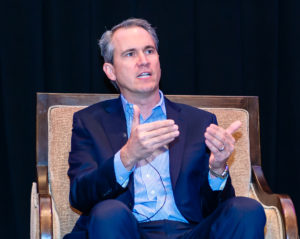
Then, while sitting in a Chamber board meeting, he heard from the head of the Metro Denver Economic Development Corporation – an affiliate of the Chamber – about the support they offer to businesses who are starting or growing, from finding a location and getting building permits to navigating tax incentives for creating jobs.
When he reached out to learn more, “the Metro Denver EDC deployed a team of people to make sure I knew that they wanted me to grow the business here,” Spiecker said.
And, they made it easy for him to focus on his business while they worked on those details. STAQ Pharma – a pharmaceutical manufacturing facility that will create ready-to-use doses of prescriptions for hospitals – is under construction in northeast Denver. It will be home to one of the largest clean rooms in the state and will incorporate robotic technology to avoid human error. They plan to add more than 70 new jobs, and through their work with the Metro Denver EDC they were approved for incentives – totaling nearly $1 million – when those jobs are added.
These resources, particularly as they started up, were invaluable, Spiecker said.
“Everybody should be reaching out … we were three guys with a business plan,” he said. “They gave us the same level of attention that any of the big companies would have gotten.”
Buying the family business
When Jeromy Metz’s family asked him to take over their business, Done Plumbing and Heating, he was apprehensive. More than 15 years later, he knows it was the best choice he could have made.
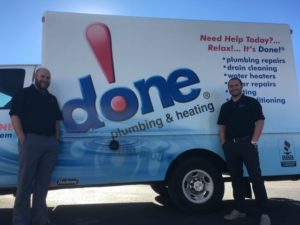
Instead of simply taking the reins, it was important to him to create a buyout plan for his parents.
“I insisted on buying the company,” Metz said. “I didn’t want to be handed the business.”
He looked at it like buying any other existing business and leaned on his longtime law firm, Minor & Brown, and his accountants to make it a smooth transition.
“We got outside experts involved a lot to help us and try to take as much emotion out of it as possible,” he said.
In buying an existing business, he had the benefit of an established reputation, customers and vendors.
“The benefit for me was I didn’t have to do any of that. That was set up by the time I bought it,” he said. “I didn’t have to have that initial ‘take a risk on me.’”
But, it gave him the opportunity to push the business forward. He transitioned their HVAC technicians to a four-day workweek – something that was uncommon when he made the shift but now is becoming an industry standard. He also recruited his younger brother, who owns a
minority stake in Done Plumbing and Heating, to add more technology to the toolboxes of their field team.
“I just continued down the path and made sure the company grew with the times,” Metz said.
Poising a business for growth in the outdoors
Kelly Watters and her husband Will met as ski instructors in Vail. But it was once they returned to city living, they realized that the outdoors really start at a person’s front door – and saw a gap in apparel that worked well in active settings like a hike or a bike but were versatile (and fashionable) enough to transition to dinner or travel.

With that, Western Rise was born four years ago. For this couple, the start-up community they needed was right here in the Rockies – this time in Telluride – as part of the Telluride Venture Accelerator.
Watters says they could grow 140 percent in 2019, and that as they scale they’re looking for funding that scales with them. Since they’ve started, they’ve explored nearly every avenue to access capital.
“We’ve done the full gamut of funding, from family and friends, to our own paychecks to loans from organizations like Colorado Lending Source and Kickstarter,” Watters said.
That Kickstarter campaign ended up being one of the most successful in the crowdfunder’s history: “It was an overwhelmingly big deal.”
With a recent round of nearly $1 million in funding, they will add four full-time employees and could potentially quadruple their sales by doubling their team.
“Our hearts have always been in the mountains and in Colorado,” Watters said. “One of the things we personally care about is growing it in a community like Telluride where we can offer stable jobs for young, educated individuals who want to stay and grow in these towns.”
Sara Crocker is the communications manager for the Denver Metro Chamber.
Every business has its own unique journey, but it’s how you take risk and build your team that Paul Tamburello, Founder of Little Man Ice Cream credits to his success.
“Risk for me has been one of those things where you test your skills, you test your team and I’ve never been let down,” Tamburello said. “Some of the skill in taking risk is learning how to read more than just the numbers – it’s about trusting your team.”
We heard from Tamburello at our Your Conversation With series earlier this month.
Despite the snow in the air, scoops and cones of ice cream from his Denver staple were shared, but what was sweeter was learning about Tamburello’s journey and the making of one of the community’s most recognizable businesses.
If you’ve driven through the Highlands neighborhood, you immediately are drawn to the milk can that is filled with laughter and people. Tamburello believes that there are three things that make people keep coming back and standing in line:
The other reason why people stand in line? “The ice cream is really damn good,” Tamburello said.
Little Man Ice Cream is set to open its fifth location this year and employ close to 200. While there is no secret recipe to business, Tamburello did share one secret with us: “In a recession there are five things that people will spend money on, and one of them is ice cream.”
Laura James is the senior marketing and communications specialist for the Denver Metro Chamber.
Whether your organization employs a full communications team or you’re a solopreneur bootstrapping your efforts, video shines in any smart marketing strategy today – so make sure you’re including it in your outreach strategies this year.
This guide, in partnership with Fireside Production, will answer your questions when it comes to using video to promote your business, such as how to:
 |
|
|---|